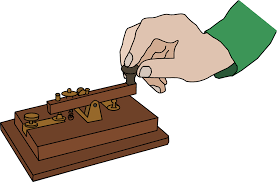
Did you know that people started working on the idea of the telegraph 85 years before its actual invention? Most of the ideas before 1838 had a variety of limiting factors. Some were too expensive, limited by current technology, or just not worth the effort to install. It wasn’t until a New York professor named Samuel Morse came along that it was actually invented.
See, Samuel Morse was originally nowhere near the idea of the telegraph. However, after receiving a letter while he was away from home that his wife had fallen ill, he rushed back home only to find out that his wife had not only died but had already been buried. After this, he became more interested in improving communication over long distances. Between this and overhearing someone talk about the newly discovered electromagnet, the telegraph began to be born.
Samuel Morse didn’t just start from scratch, though; he looked at the current ideas and creations of telegraphs. These telegraphs had 26 wires, one for each letter, making them so overly expensive that it just wasn’t worth it to build. So instead of having the machine do all the work, he decided to have people do the work, bringing the 26 wires down to just 1 and creating a language of dots and dashes, where each letter is represented by a combination of dots and dashes. With this, the invention of the electromagnet provided the current. The cost of the telegraph was brought down to a point where it was actually viable.
The work wasn’t done yet, though. Morse still had to convince people that what he created was worth the time, effort, and money it would take to lay down these wires. Morse faced skepticism from the U.S. government about its practicality and concerns about the misuse of information when trying to secure funding. He had to eventually build alliances with influential politicians to gain support for his inventions. With this, the beginning of worldwide communication was born!